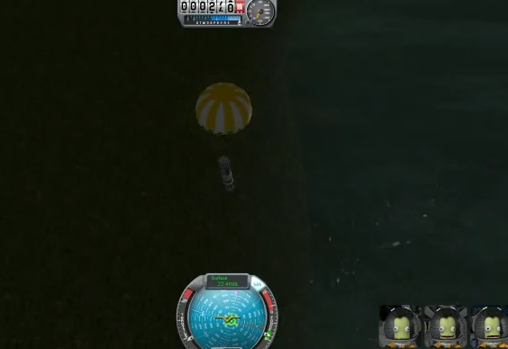
The last time we left off, I'd built a gigantic rocket to hopefully get a satellite into space after the first failed attempt. I then got scared that the giant rocket would go horribly wrong, so I downsized it to a more conservative design. It then went horribly wrong.
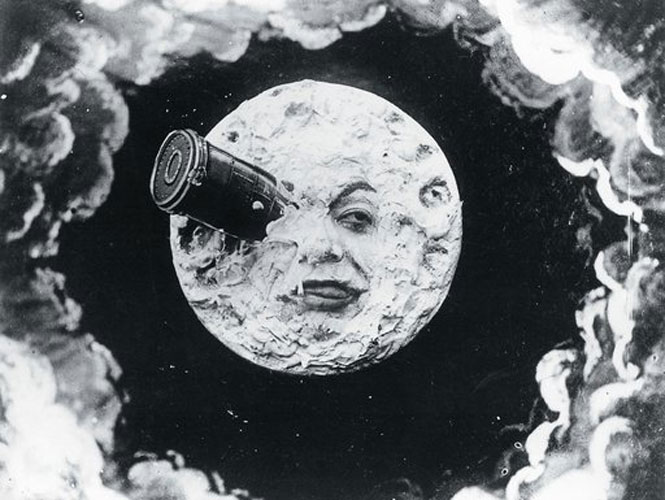
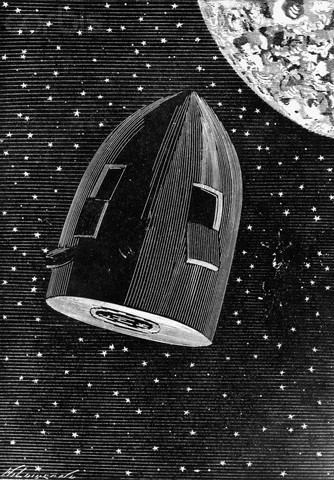
Despite the launchpad explosion which should have not only claimed my Kerbals' lives but anyone in a half-mile radius, the guys miraculously survived in their tiny crew capsule. After taking some time to regain my composure, I strengthened the whole rocket by effectively nailing girders to anything that could fall off. A sloppy approach, but one which I think neatly encapsulates the DIY spirit with which we're conducting this space program. Jules Verne would have been proud.
We then returned the launchpad again to have a third go at getting into an orbit, and putting a satellite in space. To cut a long story short, it worked: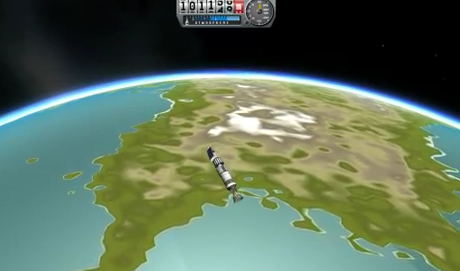
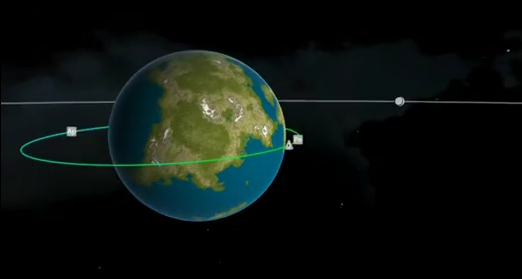
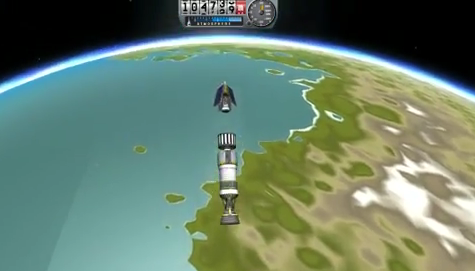
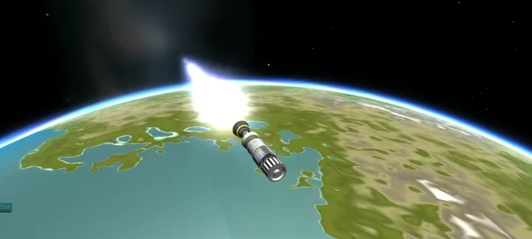

Another win for the Iron Man Mode space program. The satellite will continue circling our delightful planet forever, or until I perhaps crash into it in a odds-defying freak accident the next time we try to leave the atmosphere.
I was satisfied to see that I had tonnes of fuel left over from that mission, and the newly-strengthened rocket performed like a dream. Despite a few hiccups (by 'hiccups' I mean life-threatening explosions) I think we've pretty much nailed our orbital challenges. That leaves only one thing on the agenda.
We're going to the Mun...
... right after I have some dinner.
J: You seem quiet tonight.
Z: (pushing food around my plate with a fork) Hmm?
J: Is the food okay?
Z: Sorry? Oh, yes. Thanks honey, it's delicious. Really nice.
J: What's up?
Z: I'm just nervous. After dinner I'm going to lock myself in the office and attempt to do my first lunar fly-by and get back in one piece.
J: Oh, thank God for that. I thought something was wrong at work. I didn't realise you were talking about your... game.
Z: Kerbal Space Program.
J: Yeah.
Z: I don't think you understand how difficult it is to do a translunar journey. You have to get the angles exactly right otherwise you can overshoot the moon; you've also got to be really precise with the timings because you have to aim for a point where you think the Mun is going to be hours later, and that point is 250,000 kilometers away...
J: Do you want more gravy?
Z: More gravity? How would that help?
J: Gravy, not gravity.
Z: Oh, no thanks. But what's worse is that you can be too precise - I don't want to end up on a crash course with the Mun's surface. I need to kinda miss it slightly, go around it and hopefully return on a path home. And what if I mess up the trajectories and don't have enough fuel to correct them?
J: Zeke.
Z: What? J
: Just remember that secular variations have long-term effects on orbit prediction, so make sure you've got one fuel tank more than you think you'll need to cover all eventualities. Also, when you're in orbit and ready to go translunar, do your second-stage burn at the point of periapsis in order to get the most out of your fuel.
I was stunned. Carefully setting my fork down on the plate, I turn to my fiancee.
Z: Babe, you burn at the point of apoapsis, not periapsis. Look, if you don't have anything useful to contribute here I'm going to finish eating this downstairs.
The challenge we're about to embark upon is monolithic.
You're probably wondering what the big deal is. To put it into perspective, consider that we're adhering to the same physics which were at play during the real-life Apollo missions. Also consider that this mission has only one condition for success:
- Leave Kearth, get into planetary orbit, travel to the Mun, orbit that, then return to Kearth and touch-down with the crew intact.
That's what I hope will happen. Here are the things which probably will happen: 1) I blow up on the launch pad.
2) I don't blow up on the launch pad, but something goes wrong while trying to get into space and my guys die horribly in the attempt.
3) I don't blow up on the launch pad, we make it successfully into space, but I run out of fuel and get stuck in orbit around Kearth. My guys float around it endlessly.
4) I survive the launch, make it into space, and successfully get into orbit with loads of fuel to spare. I then mess up the translation into the Mun's orbit completely, and end up in a random orbit around the sun or something crazy like that.
5) I survive the launch, get into space, orbit Kearth, travel perfectly through the trans-Munar void but instead of orbiting it, I miss it entirely and catapult into deep space without enough fuel to return to Kearth.
6) I survive the launch, get into space, cross the void but instead of entering the Mun's orbit I slam straight into its surface at 2,000 kilometers per hour.
7) All of the above is fine and I circle the Mun brilliantly, and somehow preserve enough fuel to set a return course to Kearth. I then screw that up and end up back at point 2 - floating endlessly around the planet's orbit.
8) Or I orbit the moon, travel back to Kearth, but then accidentally slingshot around our beloved home planet and end up back at the Mun? Man, that would be nuts.
9) All might go fine and I arrive back at the planet, enter its atmosphere successfully then a random system failure prevents me from landing in one piece.
So, plenty of things can go wrong here. I try to enter these Iron Man Mode games with a touch of optimism, but on this occasion, I have to admit that I'll be surprised if the team pull through this one.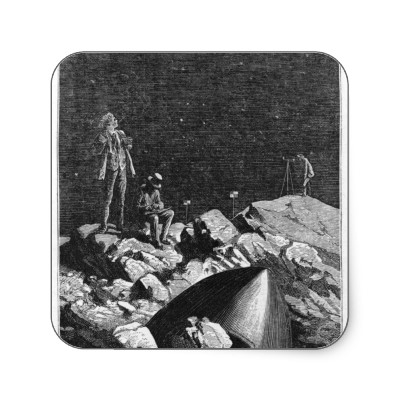 I make the final preparations for the mission. As with the Apollo program, the lunar fly-by was intended as a dry run for the actual landing. As such, I set up the rocket in the way I'll need it for the next stage of the program, and that means creating a lunar lander module.
Now, the game is still in early development and the current stock parts are slightly limited in scope. There are plenty enough to get a real kick out of the game, but at the moment there isn't anything dedicated to surface landing. The Kerbal Space Program community have been awesome so far and have plugged the gap while official releases are pending, but while I could install some fan-made parts, I want to keep it vanilla and try out a cool idea I've been toying with utilizing stock parts.
Essentially, it's easy to modify my existing set-up to incorporate landing capability: I glue some fins onto the bottom of the last stage.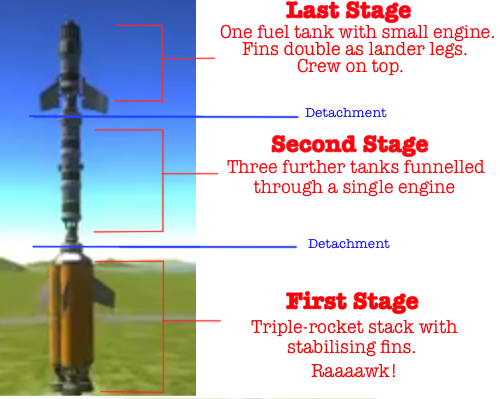 So the first stage is big enough to get us most of the way up. The second stage will be used to get us into orbit and from there onto the right path to the Mun. The final small fuel tank will be enough to make the final adjustments to put us on a course around the Mun and back to Kearth. Blasting through the atmosphere under the influence of the planet's gravity is intensive, but once you're in space a small amount of fuel goes a long way which is why the rocket stages become progressively less grandiose.
Lastly, I've attached decouplers to those fins I'll be using as lander legs when I land on the Mun later (assuming I survive this mission.) They'll serve no purpose this time around aside from a bit of extra stabilisation, but I wanted to test out how ejecting them will pan out because this is what I'll do on the way back to Kearth in order to shed some weight.
But I feel we've chatted about this long enough. I've never attempted to cross the void to the Mun before, either before this blog started or during. Or in real life, for that matter. It's time to travel from Kearth to the Mun...